

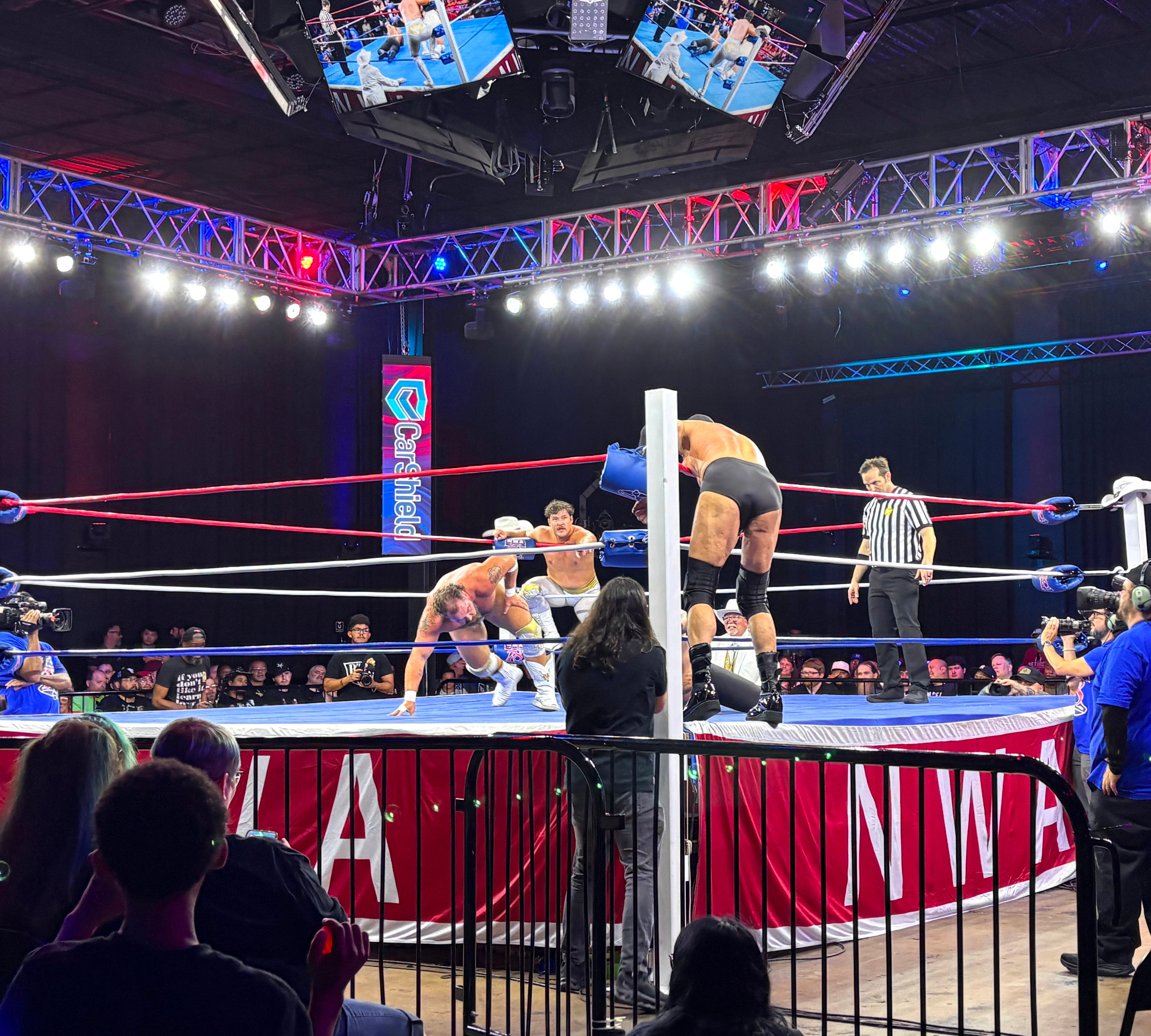
I attended NWA 78 this weekend at the 2300 Arena in Philadelphia, and I had a great time.
The media operation was well organized, the production looked good, and the building was packed with a sold-out crowd. The NWA delivered a strong card featuring Nattie Neidhart, Trevor Murdoch, “Thrillbilly” Silas Mason and a roster that kept the audience involved throughout the night.
I also had the chance to meet Nattie and talk with her briefly. She was humble, friendly and easy to talk to.
The night showed how much momentum the National Wrestling Alliance has regained.
Before COVID-19, the NWA had built one of the most interesting products in professional wrestling. NWA Powerrr had a talented roster, a clear identity and a simple weekly home on YouTube.
That original version of Powerrr also had a personal impact on me. Watching one episode in 2019 helped reignite my love of professional wrestling and eventually played a part in my decision to start DMV Wrestling News.
How Billy Corgan's NWA Reignited My Love of Pro Wrestling

I am writing this ahead of this Saturday’s NWA 76 show in Philadelphia, which I will be attending as credentialed media. I am looking forward to the event and wanted to discuss how the National Wrestling Alliance, under Billy Corgan’s ownership, reignited my passion for pro wrestling and led me to start DMV Wrestling News. I went from watching NWA Power…
The promotion had a deep collection of established names and wrestlers who appeared ready to become bigger stars. Many of those performers later ended up in WWE and All Elite Wrestling after the pandemic.
Then COVID-19 stopped the NWA’s progress.
Production shut down, much of the roster moved elsewhere, and executive producer Dave Lagana left the company. When Powerrr returned, the NWA was rebuilding with a different roster and a different operation.
The company also moved between several television and streaming platforms. First-run programming went from YouTube to FITE (now Triller), returned to YouTube and later appeared on The CW app, X and Roku.
Those platforms kept the NWA visible, but the frequent changes made it harder for fans to know where and when to watch.
Billy Corgan deserves credit for keeping the company alive through that period. The NWA reduced costs, continued running events and looked for a business model that could last.
The most important recent decision was putting NWA Powerrr on Comet.
The Sinclair-owned network gave the NWA a regular broadcast television home. New episodes now air free every Saturday at 4 p.m. Eastern, followed by another airing at midnight. Comet is available over the air in many markets, through several television providers and through the network’s free online stream.
That arrangement gives fans something the NWA had lacked for several years: a consistent time and place to watch every week.
The ratings show viewers are finding the program.
The May 2 premiere reached 275,000 households across its Comet airings, according to Nielsen figures released by the NWA.
The audience did not disappear after the first episode.
Comet executive Adam Ware reported that the July 4 episode earned the program’s highest ratings since its launch. It averaged 32,000 viewers in the important 25-to-54 demographic and peaked at 60,000.
The July 11 episode reached 273,000 households despite having two airings instead of the three that helped produce the premiere number.
During the 4 p.m. broadcast, the audience grew as the show continued. The episode began with 28,000 total viewers and 14,000 viewers in the 25-to-54 demographic. After 45 minutes, the total audience had increased to 44,000, while the demographic audience rose to 21,000.
That may be the most encouraging part of the ratings story.
People were not only finding Powerrr. More viewers were watching as the episode went on.
That suggests the NWA is doing more than drawing people who are curious about its return to television. It appears to be building an audience that enjoys the show and continues watching.
I had followed the Comet ratings before attending NWA 78, but the crowd in Philadelphia showed that the renewed interest was not limited to television.
The partnership also appears to be a good fit. Comet is built around science-fiction, fantasy and other programming with established fan bases. The NWA also has a long history, recognizable characters and a style of presentation that rewards viewers who return each week.
The NWA added another important part of its distribution strategy when it reached an agreement with Tubi.
New episodes still premiere on Comet on Saturdays. They are then added to Tubi the following Thursday, giving viewers a free way to watch on demand without buying another subscription.
That combination may be the NWA’s best distribution arrangement since the original YouTube run.
Comet gives the company a regular television time slot. Tubi gives people an easy way to catch up. Both are free.
The NWA was building something special before COVID-19. Like many companies, it lost momentum during the pandemic and struggled to regain it afterward.
It never went away.
Corgan kept the company alive while it rebuilt its roster and searched for a sustainable path forward. The Comet and Tubi agreements now appear to have given the NWA that path.
NWA 78 showed what the renewed momentum looks like inside an arena. The building was sold out, the production was professional, and the crowd remained involved throughout the night.
The Comet ratings show that people are also finding the NWA at home.
The NWA has found its momentum again.