


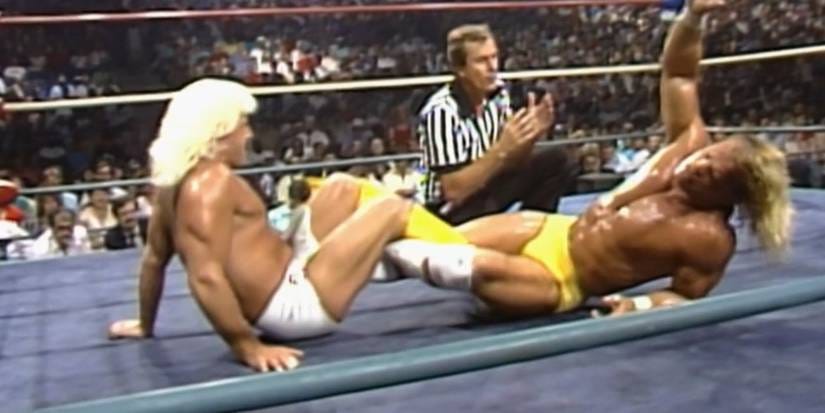
This Friday marks the anniversary of one of the most debated finishes in Great American Bash history, and it happened right here in our region in Baltimore.
National Wrestling Alliance presented The Great American Bash on July 10, 1988, at Baltimore Arena. In the main event, Ric Flair defended the NWA World Heavyweight Championship against Lex Luger.
Luger was not just another challenger. He had been part of the Four Horsemen before breaking away, and the build to Baltimore made him look like the next real threat to Flair’s title reign.
That is why the finish still gets talked about.
Late in the match, Luger had Flair in trouble and applied the Torture Rack. He appeared to be close to winning the NWA World Heavyweight Championship. Instead, the match was stopped because Luger was bleeding. The official explanation given at the event was that the bout had been stopped because of blood under Maryland State Athletic Commission rules.
Flair retained the championship by referee stoppage.
For fans in the arena and watching on pay-per-view, it was a frustrating ending. Luger was in control, Flair was in danger, and then the match was over. Luger’s bleeding also did not appear severe enough to many watching to justify stopping the main event.
There is also a wrestling distinction that matters here.
Bleeding “the hard way” means a wrestler was cut open accidentally through contact in the match, such as from a strike, collision, or fall. That is different from gigging or blading, where a wrestler intentionally cuts himself, usually with a small concealed blade, to produce blood as part of the performance.
That issue did not disappear with the end of the territories era. Modern commission rules in some states still do not allow blood in professional wrestling. In Maryland, promoters and wrestlers have reportedly been told that when someone starts bleeding, they have roughly 30 seconds to finish the match.
The standard has not always been enforced evenly. At a recent MCW show, a match between Joe Keys and Mike Walker continued after Keys reportedly bladed and kept bleeding, with Keys sporting a crimson mask before the match ended.
The rule has continued to affect how Maryland wrestling matches are worked, how referees and promoters react when blood appears, and how quickly a planned finish may have to change once bleeding starts.
That is part of why the Flair-Luger finish still matters. It was not just an old wrestling controversy. It was a worked sport running into real regulation in the middle of a major show.
In Baltimore in 1988, those two worlds collided in the main event of the first Great American Bash pay-per-view. Flair retained the NWA World Heavyweight Championship after Luger’s bleeding became the official reason for the stoppage.
The finish protected Flair’s title reign while keeping Luger strong, but it also fed the broader criticism of disputed Jim Crockett Promotions finishes during that era, often associated with Dusty Rhodes’ booking. Luger did not win the championship, but the stoppage gave Jim Crockett Promotions a reason to continue the Flair-Luger program after Baltimore.
Whether fans saw it as commission enforcement, booking convenience, or both, the finish became part of the match’s legacy.
Thirty-eight years later, it remains one of the most debated endings in Great American Bash history, and it happened right here in our region in Baltimore.