


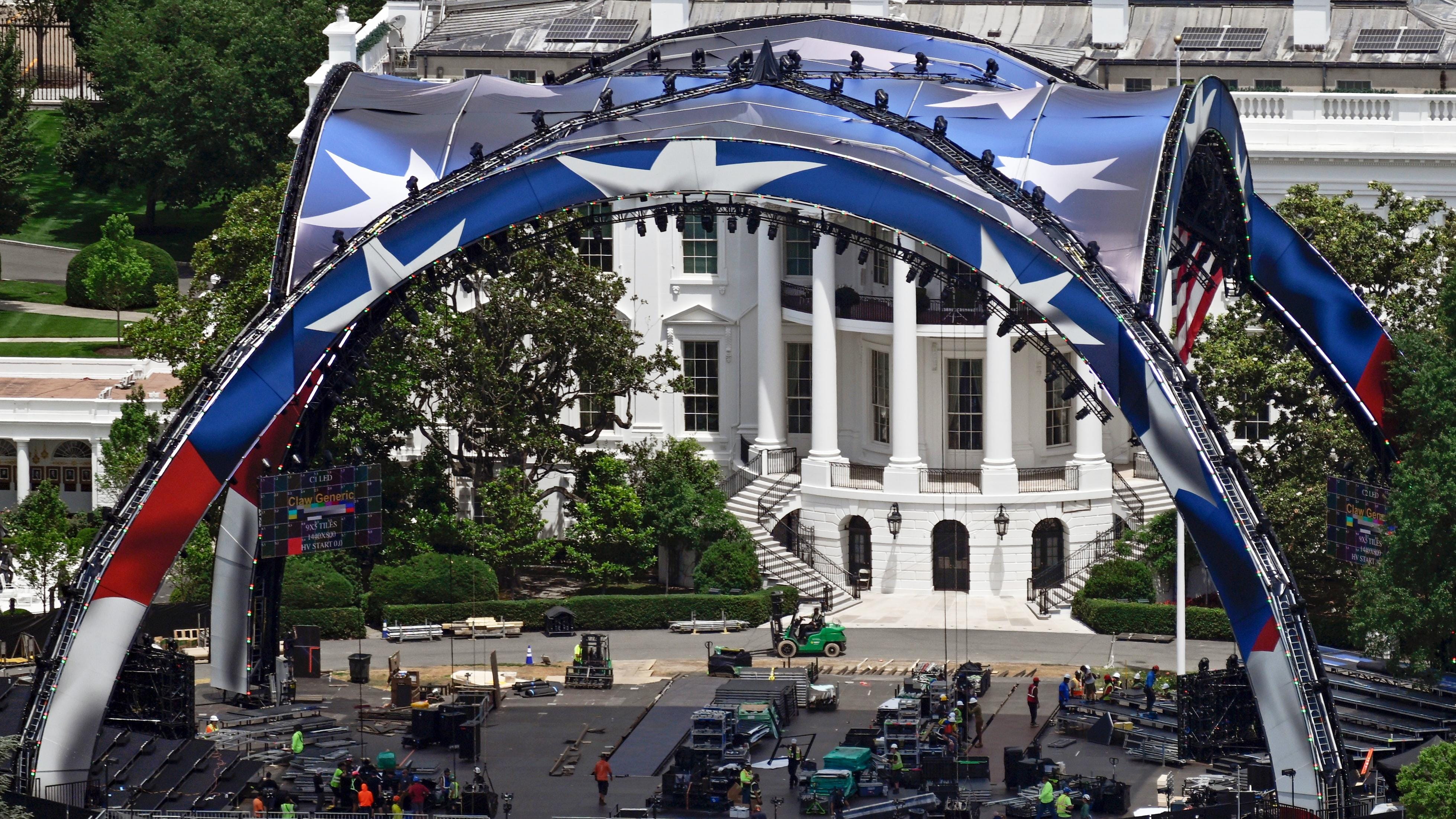
An Axios story about a UFC cage going up on the White House lawn has put a spotlight on something D.C.’s independent wrestling scene has been dealing with for years.
The mixed martial arts event scheduled for Sunday has renewed complaints from local wrestling promoters who say the District’s rules have helped push smaller wrestling shows into Maryland and Virginia. It is a familiar problem for anyone who follows the local scene. D.C. has the venues, the fans and the history, but the red tape has made it harder for independent promotions to run there.
According to Axios, the UFC has said it does not need to meet the same D.C. requirements because the event is being held on federal land. The event is not expected to be sanctioned by the D.C. Combat Sports Commission, though WTOP reported the card will be sanctioned by the Association of Boxing Commissions.
That distinction has frustrated some in the local wrestling community.
“It’s another example of federal overreach in terms of local affairs,” Andrew Huff, chair of the D.C. Combat Sports Commission, told The Washington Post. “Every promoter in the District of Columbia should be, and is, held to the same standard, whether you’re putting on a small wrestling show or a major event.”
Christian Harris, co-founder of F1ght Club, told Axios the situation reflects the different treatment available to UFC President Dana White, a longtime ally of President Donald Trump.
“It makes sense that Dana White, who is great friends with our current president and administration, is able to see more privileges than we do as it pertains to running events in D.C.,” Harris said.
The frustration goes beyond one UFC event. D.C. currently applies the same regulatory framework to professional wrestling that it does to boxing and mixed martial arts. Harris and other wrestling advocates argue that independent wrestling should be treated differently because it is a theatrical performance with a choreographed outcome.
Those rules can add licensing, medical and other costs to shows that already operate on tight margins. For small independent promotions, that can be the difference between running in the District and moving a few miles outside the city.
F1ght Club previously ran shows in D.C., including events at D.C. Brau, but has since moved to Cheverly, Maryland.
“We want to go back to D.C. so desperately,” Harris said.
The issue is now before the D.C. Council. The Theatrical Wrestling Regulation Amendment Act of 2025, introduced by Council member Brianne K. Nadeau, would create a separate category for theatrical wrestling events in smaller venues and ease some of the restrictions that currently apply to those shows.
A public hearing on the bill was held March 25.
For now, D.C.’s independent wrestling scene remains largely outside the city, even as one of the biggest combat sports companies in the world prepares to run on the White House lawn.
Sources